Dhaka 7:09 pm, Tuesday, 17 November 2026
Bangla

Shahjalal Airport expansion cost rises to Tk 22,213cr in third revision

  • Reporter Name
  • Update Time : 11:29:26 am, Wednesday, 30 September 2026
  • 57 Time View

The cost of the Hazrat Shahjalal International Airport Expansion Project has increased by Tk 847.57 crore in its third revision, taking the total project cost to Tk 22,213.09 crore, while the implementation deadline has been extended by another year to June 2027.

The revised project was approved at a meeting of the Executive Committee of the National Economic Council (ECNEC) at the Bangladesh Secretariat on Tuesday. The meeting approved 13 projects involving a combined estimated cost of Tk 15,823.57 crore, while three proposals were sent back for restructuring.

According to Planning Ministry documents, the airport expansion project was originally approved in July 2016 at a cost of Tk 13,610 crore, with completion scheduled for June 2022. After two revisions, the project cost had risen to Tk 21,365.52 crore. The latest revision takes the cost to Tk 22,213.09 crore—an increase of more than Tk 8,600 crore, or about 63 percent, over the original estimate.

The latest increase comes even though physical progress of the project has reached about 99.93 percent. Financial progress, however, stands at around 95.23 percent, according to information presented after the ECNEC meeting.

State Minister for Planning Zonayed Abdur Rahim Saki said the additional allocation would cover outstanding works, facilities that were not included in the original project scope, contractual dispute settlements and maintenance costs. Of the additional expenditure, Tk 667 crore has been earmarked for 30 months of maintenance from January 2025 to June 2027.

Under the latest revision, the government will provide Tk 5,115.97 crore, while Tk 17,097.12 crore will come as project loans. The project is being implemented by the Civil Aviation Authority of Bangladesh (CAAB), with financing support from the Japan International Cooperation Agency (JICA).

JICA signed a loan agreement with Bangladesh in December 2023 for up to 76.635 billion yen for the third phase of the airport expansion project. The loan carries an annual interest rate of 1.3 percent, with a 30-year repayment period and a 10-year grace period.

The project is considerably broader than the construction of the third passenger terminal alone. It includes the new international passenger terminal, cargo facilities, ancillary infrastructure, rapid-exit taxiways, a multi-level car park and other airport-support systems. JICA says the project is intended to expand the airport’s capacity, improve passenger convenience and safety, and meet growing demand for air transport.

Partial opening targeted for December 16

Despite the project being almost physically complete, the third terminal has yet to enter full-scale commercial operation. The government has now set December 16 as the target for partial opening, with around 20 flights expected to initially operate from the facility. Full operations are expected to be introduced gradually.

The delay has been linked in part to the integration of equipment and unresolved operational arrangements. Negotiations are also continuing with a Japanese consortium over the operation and maintenance of the terminal. Recent reports said the authorities were targeting an initial operation involving around 10 international flights on December 16, with the number to increase gradually.

The terminal underwent a soft opening in October 2023, but passengers have not yet been able to use it for regular commercial operations. Officials have said the building was substantially completed, but equipment integration and other operational arrangements remained unfinished.

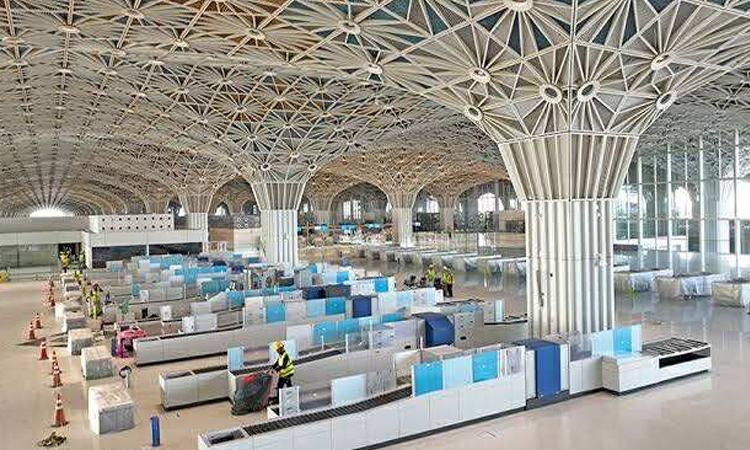
The new terminal has been designed with 115 check-in counters, 66 departure immigration desks, 59 arrival immigration desks, 12 boarding bridges and 12 conveyor belts. The broader expansion is expected to raise Hazrat Shahjalal International Airport’s annual passenger-handling capacity substantially, with different official sources putting the eventual capacity at around 20 million to 24 million passengers depending on the facilities and expansion configuration. Cargo-handling capacity is expected to rise from around 200,000 tonnes to 500,000 tonnes annually.

Focus on project appraisal

The latest cost and time revision has also renewed attention to the quality of project preparation. At the ECNEC meeting, greater effectiveness in feasibility studies was emphasised, with the government deciding to formulate a policy on feasibility assessments.

The authorities said stronger scrutiny at the feasibility and planning stages could help reduce future cost and time overruns. The latest revision means a project initially scheduled for completion in June 2022 is now scheduled to continue until June 2027, extending the implementation period by five years beyond the original deadline.

The third terminal is regarded as a major piece of Bangladesh’s aviation infrastructure because it is intended not only to ease pressure on the existing terminals but also to support the country’s growing passenger and cargo traffic. JICA says international passenger traffic at Dhaka airport had already approached the existing terminal capacity of eight million passengers annually, underscoring the need for additional capacity.
Tag :
Popular Post

Shahjalal Airport expansion cost rises to Tk 22,213cr in third revision

Update Time : 11:29:26 am, Wednesday, 30 September 2026

The cost of the Hazrat Shahjalal International Airport Expansion Project has increased by Tk 847.57 crore in its third revision, taking the total project cost to Tk 22,213.09 crore, while the implementation deadline has been extended by another year to June 2027.

The revised project was approved at a meeting of the Executive Committee of the National Economic Council (ECNEC) at the Bangladesh Secretariat on Tuesday. The meeting approved 13 projects involving a combined estimated cost of Tk 15,823.57 crore, while three proposals were sent back for restructuring.

According to Planning Ministry documents, the airport expansion project was originally approved in July 2016 at a cost of Tk 13,610 crore, with completion scheduled for June 2022. After two revisions, the project cost had risen to Tk 21,365.52 crore. The latest revision takes the cost to Tk 22,213.09 crore—an increase of more than Tk 8,600 crore, or about 63 percent, over the original estimate.

The latest increase comes even though physical progress of the project has reached about 99.93 percent. Financial progress, however, stands at around 95.23 percent, according to information presented after the ECNEC meeting.

State Minister for Planning Zonayed Abdur Rahim Saki said the additional allocation would cover outstanding works, facilities that were not included in the original project scope, contractual dispute settlements and maintenance costs. Of the additional expenditure, Tk 667 crore has been earmarked for 30 months of maintenance from January 2025 to June 2027.

Under the latest revision, the government will provide Tk 5,115.97 crore, while Tk 17,097.12 crore will come as project loans. The project is being implemented by the Civil Aviation Authority of Bangladesh (CAAB), with financing support from the Japan International Cooperation Agency (JICA).

JICA signed a loan agreement with Bangladesh in December 2023 for up to 76.635 billion yen for the third phase of the airport expansion project. The loan carries an annual interest rate of 1.3 percent, with a 30-year repayment period and a 10-year grace period.

The project is considerably broader than the construction of the third passenger terminal alone. It includes the new international passenger terminal, cargo facilities, ancillary infrastructure, rapid-exit taxiways, a multi-level car park and other airport-support systems. JICA says the project is intended to expand the airport’s capacity, improve passenger convenience and safety, and meet growing demand for air transport.

Partial opening targeted for December 16

Despite the project being almost physically complete, the third terminal has yet to enter full-scale commercial operation. The government has now set December 16 as the target for partial opening, with around 20 flights expected to initially operate from the facility. Full operations are expected to be introduced gradually.

The delay has been linked in part to the integration of equipment and unresolved operational arrangements. Negotiations are also continuing with a Japanese consortium over the operation and maintenance of the terminal. Recent reports said the authorities were targeting an initial operation involving around 10 international flights on December 16, with the number to increase gradually.

The terminal underwent a soft opening in October 2023, but passengers have not yet been able to use it for regular commercial operations. Officials have said the building was substantially completed, but equipment integration and other operational arrangements remained unfinished.

The new terminal has been designed with 115 check-in counters, 66 departure immigration desks, 59 arrival immigration desks, 12 boarding bridges and 12 conveyor belts. The broader expansion is expected to raise Hazrat Shahjalal International Airport’s annual passenger-handling capacity substantially, with different official sources putting the eventual capacity at around 20 million to 24 million passengers depending on the facilities and expansion configuration. Cargo-handling capacity is expected to rise from around 200,000 tonnes to 500,000 tonnes annually.

Focus on project appraisal

The latest cost and time revision has also renewed attention to the quality of project preparation. At the ECNEC meeting, greater effectiveness in feasibility studies was emphasised, with the government deciding to formulate a policy on feasibility assessments.

The authorities said stronger scrutiny at the feasibility and planning stages could help reduce future cost and time overruns. The latest revision means a project initially scheduled for completion in June 2022 is now scheduled to continue until June 2027, extending the implementation period by five years beyond the original deadline.

The third terminal is regarded as a major piece of Bangladesh’s aviation infrastructure because it is intended not only to ease pressure on the existing terminals but also to support the country’s growing passenger and cargo traffic. JICA says international passenger traffic at Dhaka airport had already approached the existing terminal capacity of eight million passengers annually, underscoring the need for additional capacity.