Reporter Name
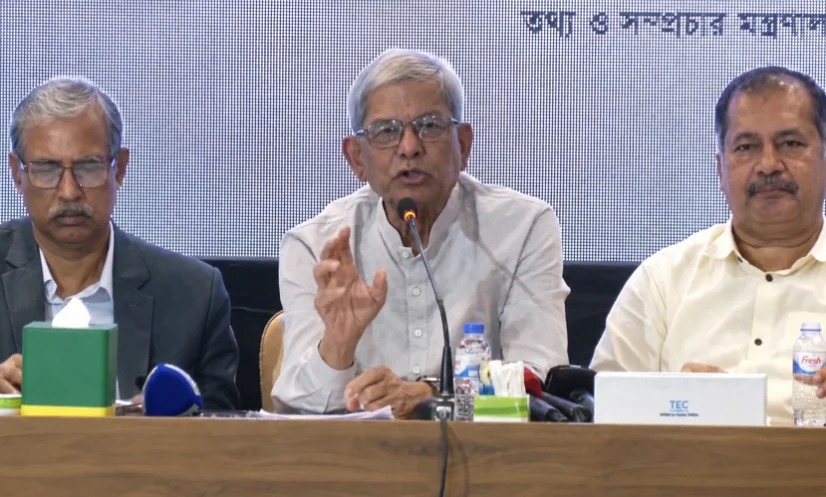
BNP Secretary General and Local Government, Rural Development and Cooperatives Minister Mirza Fakhrul Islam Alamgir on Friday criticised statements suggesting the government should not be allowed to complete its five-year tenure, describing such rhetoric as “fascist” and incompatible with democratic principles.
Speaking at a seminar titled “Role of Media in Sustainable Democracy”, organised by the Television Editors Council at a hotel in Dhaka, Fakhrul said the government had been in office for less than five months and should be given time to address the country’s longstanding challenges.
“The government has not even completed five months. Yet people are saying it has failed. Democracy cannot be sustained with such intolerance,” he said.
Drawing a comparison with the previous administration led by fugitive death-row convict Sheikh Hasina, Fakhrul alleged that democratic institutions had been weakened in the name of democracy.
“Exactly in the language of fascists and Hasina, it is being said that we will not let them complete five years; we will end it before that. This is frightening language,” he remarked.
Referring to the situation surrounding the president’s programme on July Uprising Day, Fakhrul said the developments were inconsistent with democratic norms. He added that the proposed July Charter could be debated in parliament.
The BNP leader said the current administration inherited deep-rooted structural problems rather than creating them, citing crises in the gas, electricity and banking sectors.
He alleged that previous governments had failed to adequately explore domestic gas resources, making the country increasingly dependent on imported energy. He also blamed the expansion of quick-rental power projects for creating long-term challenges in the electricity sector.
On banking, Fakhrul said the sector had been left in a severely weakened condition, making reform and restructuring a major task for the government.
“We cannot afford to be restless. We must remain patient and tolerant. Otherwise, democracy can never move forward,” he said.
He noted that many established democracies took centuries to develop stable democratic institutions and argued that judging the government’s performance after only a few months reflected “extreme intolerance.”
Fakhrul urged news organisations to present balanced reporting by highlighting both the government’s shortcomings and its achievements.
He expressed concern that some television talk shows focused exclusively on what they described as the government’s failures during its first few months in office while giving little attention to its accomplishments.
He also warned about the growing influence of social media, saying misinformation and online campaigns could quickly damage an individual’s reputation and lifelong achievements. He noted that several countries were introducing measures to address the harmful effects of social media.
Stressing the importance of an independent and strong media for sustaining democracy, Fakhrul also highlighted challenges faced by television journalists, including the absence of a wage board and instances of employees being dismissed without adequate explanation.
“Journalists must unite to protect their own interests,” he said.
Addressing the seminar, Information and Broadcasting Minister Zahir Uddin Swapon said journalism should not be treated as a corporate business.
He said the sacrifices made during the July Uprising had created new opportunities for democratic development and reaffirmed the government’s commitment to building a sustainable and stronger media sector at the earliest opportunity.